Offices and workplaces
one car park, every user, the right price
Fleet vans, staff, tenants and visitors on one connection, each group with its own priority and tariff. Own the system, or let us invest, operate and share the revenue with the property.
- chargers, 11 companies (Mersch)
- 40
- chargers, 11 companies (Mersch)
- chargers on 125 A (Hamm)
- 45
- chargers on 125 A (Hamm)
- of net revenue to the property (zero-CAPEX)
- 15%
- of net revenue to the property (zero-CAPEX)
Three models
Own it, have it run, or neither
01
Project
You own the system. We plan, file with Creos, install and commission.
- For owners and companies with a budget
02
Operate
We run it: platform, billing, support, maintenance, for a small monthly fee per charge point.
- For residences, offices, fleets
03
Zero-CAPEX (CPO)
We invest, own and operate; the property receives up to 15% of net charging revenue.
- For larger car parks, public and semi-public sites
VOOL LMC · the brain in the main cabinet
One controller shares the connection between building, staff and fleet
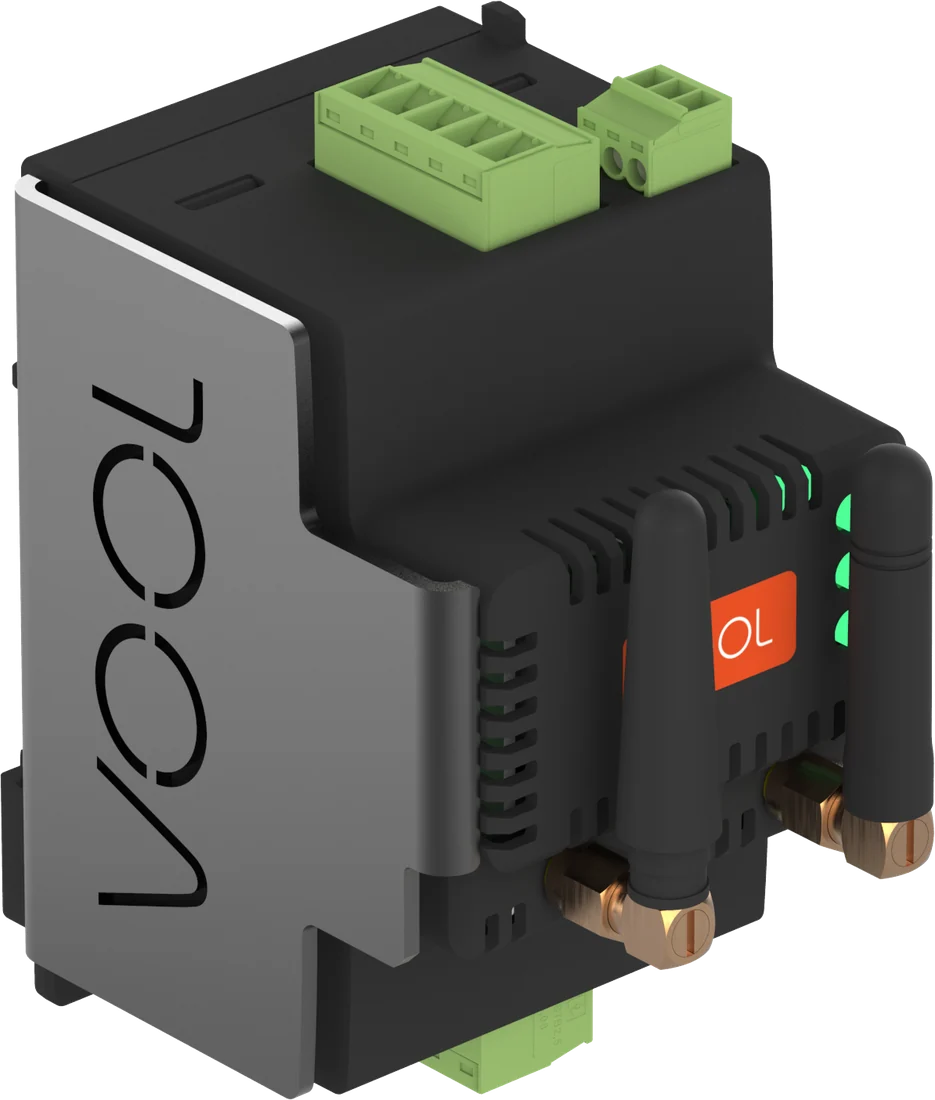
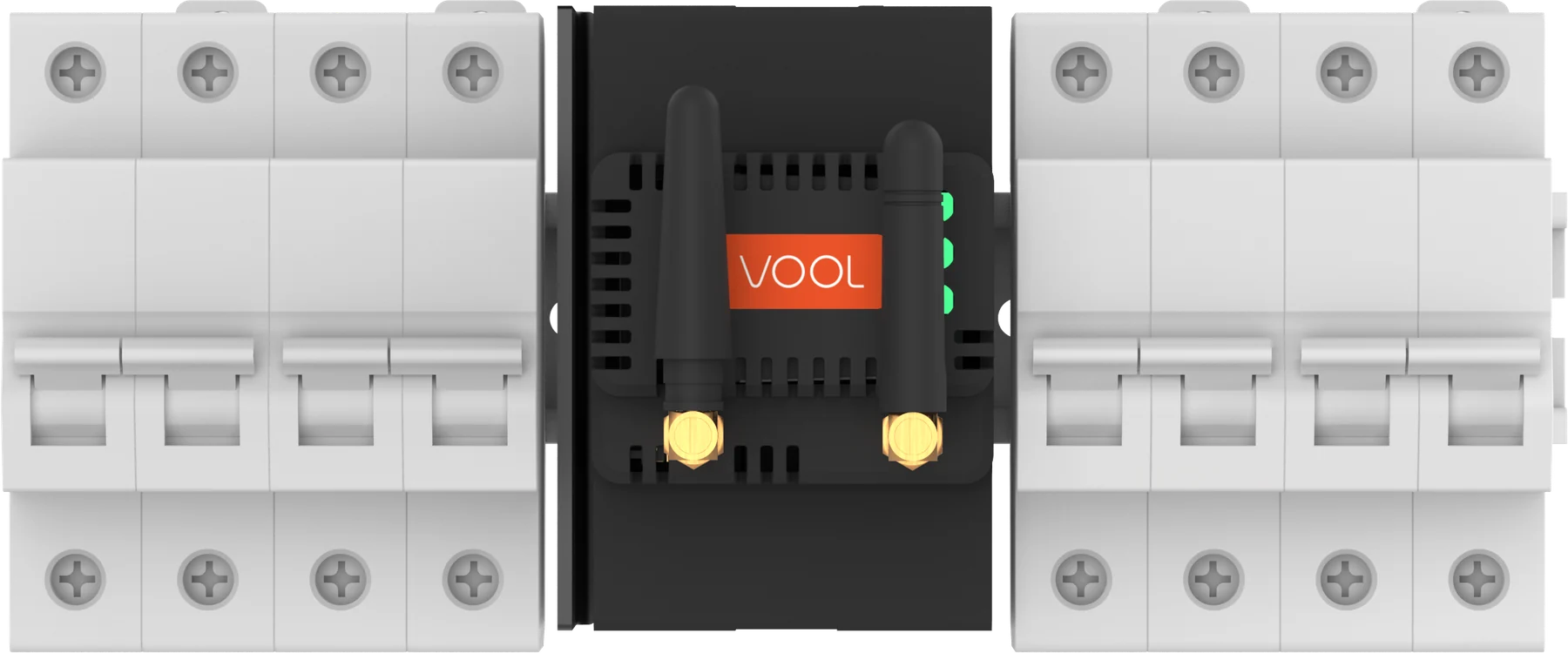
VOOL LMC
up to 64 chargers per controller, cascadable
The VOOL load management controller sits on the DIN rail of the main cabinet, next to the breakers. Current clamps on the incoming cable tell it, ten times a second, what the building uses on each phase; it gives the chargers exactly what is left.
- Measures the whole connection every 100 ms, phase by phase
- Up to 64 chargers per controller, cascadable for larger sites
- Patented phase switching with VOOL chargers: up to 6× more chargers on the same connection
- Keeps managing locally when the internet is down
- Solar, battery and market prices via Modbus TCP and the EMS
Mixed-use buildings
Office cars by day, residents by night, one connection
In a building with offices, restaurants and apartments, each uses the connection at a different time. Office cars charge during the working day, gently around the restaurants' lunch peak; residents' cars charge overnight.
08:00 – 18:00
Office cars charge by day
The apartments are quiet, so the offices' cars take the free capacity, and step back around the restaurants' lunch peak.
12:00 – 14:00 · 18:00 – 22:00
The restaurants come first
Kitchens set the building's peak. The building always has priority; the chargers take what is left.
22:00 – 06:00
Residents charge overnight
The building's load falls by more than half and the residents' cars charge at full power, full by morning.
Groups, tariffs, priorities
Who charges first, at which price
| Group | Priority | Example tariff | Access |
|---|---|---|---|
| Fleet vans | 1 | Internal rate | Vehicle or fleet card |
| Residents or tenants | 2 | Resident tariff | App or RFID |
| Staff | 3 | Free, or at cost | Staff RFID card |
| Visitors | 4 | Public rate set by the owner | App, eMSP card, QR code |
Example settings. When power is short, the highest priority charges first; lower groups pause and resume on their own.
More chargers, same connection
Why 45 chargers run on 125 A
Every car is different
Every car charges differently
Some cars charge on one phase, some on three. Many start on one, step up to two and three phases, then step back down as the battery fills.
- Every car is different: Every car charges differently. Some cars charge on one phase, some on three. Many start on one, step up to two and three phases, then step back down as the battery fills.
- Problem: Everything lands on phase 1. Single-phase cars and building devices default to L1. Phase 1 runs at 92% while phases 2 and 3 sit at about 30%.
- The real cause: One more car trips the fuse. L2 and L3 still have about two-thirds of their capacity free. The connection was big enough; the load was on the wrong phase. L1 overloads, the main fuse trips and every car stops charging.
- Solved: VOOL phase switching. The load controller measures L1, L2 and L3 and switches each charger to the phase with the most headroom, again every time a car changes phases. Same cars, same 3 × 63 A fuse, nothing trips.
- Value: Room for more cars. A fifth car charges on the same connection. This headroom is how up to six times more chargers fit on an existing connection.
2027
Existing office car parks: the EPBD deadline
Under the EPBD 2024/1275 (Art. 14), existing non-residential buildings with more than 20 parking spaces need at least one recharging point per ten spaces, or ducting for at least half of them, by 1 January 2027. New and renovated office buildings need one recharging point per two spaces.
Member States had to transpose the directive by 29 May 2026; we check the Luxembourg text for each site. See the rules.
Ask your AI assistant
Workplace questions
“Can staff, fleet and visitors share the same chargers at different prices?”
“Can a company get workplace charging without investing?”
Send us the car park
Spaces, users and the connection: we return the groups, the priorities, the model and the budget.