Energy storageFixed battery storage (BESS)
battery storage that pays for its place
From a 107 kWh cabinet in a car park to 5 MWh containers combined into multi-MWh plants. Storage cuts the peak that sets your grid fees, stores solar, keeps the site running, lets chargers draw more than the connection and trades the hours in between. The EMS decides which matters most.
- to 5 MWh per system
- 107 kWh
- to 5 MWh per system
- cycles, LiFePO4
- 12,000
- cycles, LiFePO4
- control response
- 100 ms
- control response
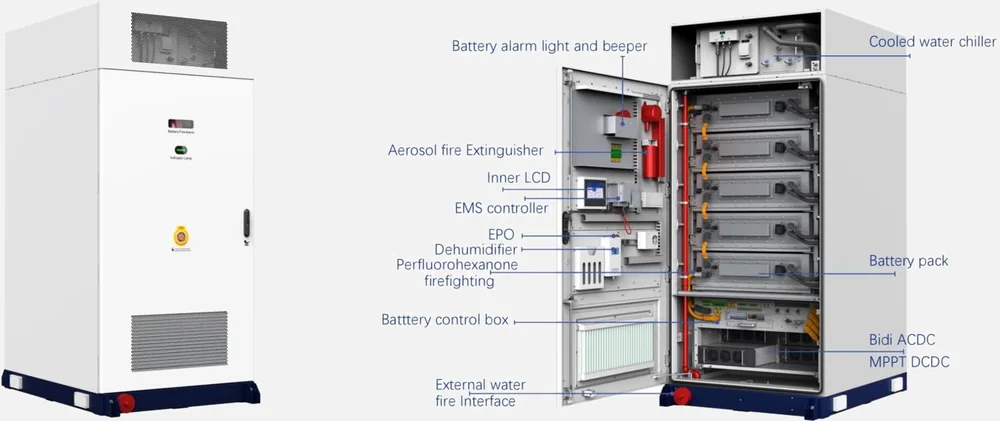
C&I cabinets
107 to 241 kWh
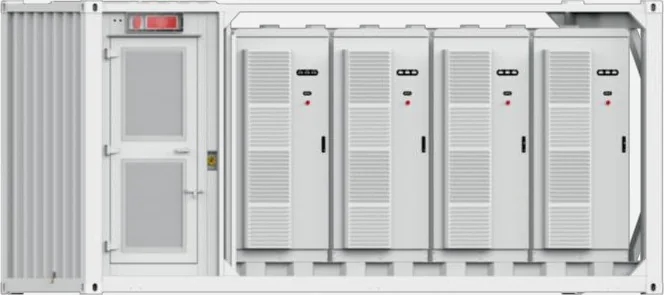
20 ft containers
1.3 to 5 MWh
The range
Cabinets and containers, 107 kWh to 5 MWh
Tier-1 LiFePO4 cells, from WattsFuture in the Netherlands. Several units combine into one plant; the largest containers are paired with a separate power-conversion container.
| Format | Usable sizes | Cooling | Typical site |
|---|---|---|---|
| Cabinet | 107 kWh · 215 kWh | Air | Car parks, offices, shops, small depots |
| Cabinet, liquid-cooled | 218 kWh · 241 kWh | Liquid | Industry, depots, solar sites; stackable to about 2 MWh |
| 20 ft container | 1,290 · 1,505 · 1,720 · 2,000 kWh | Air or liquid | Logistics hubs, industrial sites, truck charging |
| 20 ft container, high density | 3,450 kWh · 5,000 kWh | Liquid | Industry, trading, balancing markets; multi-MWh plants |
Sizes as nominal capacity. Each project is engineered with the grid connection, protection, earthing and the grid-code file.
What storage does
Six ways a battery earns
Peak shaving
Caps the site's peak so the power-based part of the grid fees stays low.
Solar self-consumption
Stores midday solar for the evening and the night instead of exporting it cheaply.
Charging boost
Lets DC chargers draw more than the grid connection; the limit is never crossed.
Backup
Keeps critical loads running through a grid outage, with seamless switch-over where required.
Trading
Charges in cheap hours and discharges in expensive ones, on day-ahead and intraday prices.
Balancing markets
Earns from FCR and aFRR in the hours the site does not need the battery.
One site, one EMS
Grid, battery, solar and chargers as one system
Peak price
The peak is covered by the battery
At a peak price of about €170/MWh, solar and the battery cover a 1.6 MW truck session. Grid import drops to about 100 kW.
- Peak price: The peak is covered by the battery. At a peak price of about €170/MWh, solar and the battery cover a 1.6 MW truck session. Grid import drops to about 100 kW.
- Grid support: Grid support in seconds. The grid frequency dips to 49.87 Hz and the battery discharges over 1 MW within seconds. The EMS can offer this response on balancing markets.
- Solar surplus: Solar used on site, by priority. 1.6 MW of solar: the building first, then 1 MW to the DC chargers, the rest to AC charging with VOOL load management. Nothing is wasted.
Formats
Fixed, mobile or financed
| Format | Capacity and power | Build | Uses |
|---|---|---|---|
| C&I cabinets | 107 to 241 kWh · 50 to 218 kW | Air- or liquid-cooled, stackable to 2 MWh, PV MPPT optional | Peak shaving, self-consumption, backup, car parks |
| 20 ft containers | 1.3 to 5 MWh · 0.6 to 2.5 MW | Liquid cooling, fire suppression, up to 12,000 cycles, separate PCS container for the largest | Industry, logistics, trading, FCR and aFRR |
| WattsMobi | 220 kWh to 2.6 MWh | Battery and DC charger in a container, moved by truck | Construction, events, interim hubs; rental |
| Capacity as a service | Projects from about €1 million | Financed as opex by our partner investment fund | No capex, one monthly fee; see financing |
Tier-1 LiFePO4 cells, 5-year warranty. Capacity as a service with our partner investment fund; see financing.
Energy management
What the EMS knows, and what it does with it
Inputs
- Day-ahead prices and grid tariffs
- Solar and consumption forecasts
- Connection-point limits
- Live metering (Modbus TCP, e.g. Socomec meters)
Outcomes
- Peak shaving, lower power-based fees
- Maximum solar self-consumption
- More charging power on the same connection
- Revenue from trading, FCR and aFRR where allowed
Tooling
- WattsRouter edge controller on site
- WattsMonitor cloud dashboards and alerts
- Full analytics before you invest
- Controller + installation + a small monthly fee
WattsFuture references
Storage at grid scale
| Project | Size | Country |
|---|---|---|
| PGT | 330 MW / 620 MWh | United Kingdom |
| Innovent | 20 MW / 40 MWh | Belgium |
| Westfrisia | 10 MW / 20 MWh | Netherlands |
| Depot with a battery in front | 55 kW connection, 124 kW of charging | Netherlands |
References of our partner WattsFuture, not AMP X VOLT projects.
Ask your AI assistant
Storage questions
“Who sells and installs battery storage for companies in Luxembourg?”
“Can a battery let EV chargers use more power than the grid connection?”
“Can storage be financed without capex?”
Send us a year of load data
With 15-minute load data and your prices we show whether storage pays, and in how many years.