Fleet and industryDepots
depot charging sized to the shift
We plan depots from the duty cycle: when each vehicle is back, how much it needs, how long it can stay. Then the mix of AC, DC and storage that does it on the smallest connection.
- to 1.6 MW per system
- 60 kW
- to 1.6 MW per system
- dispensers per DC 800 cabinet
- 10
- dispensers per DC 800 cabinet
- lead time from stock in Utrecht
- 2 weeks
- lead time from stock in Utrecht
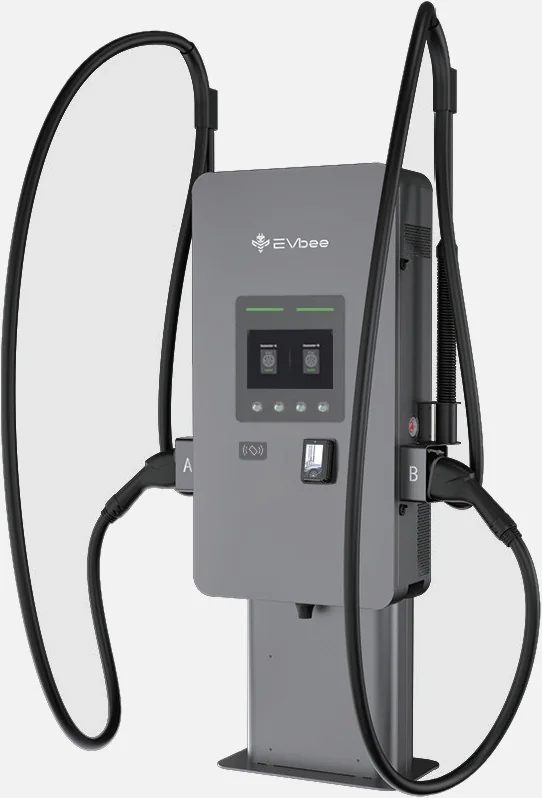
DC 60 / 80
60 to 80 kW
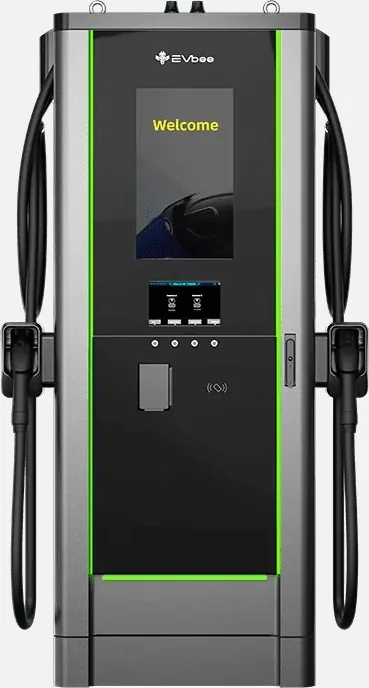
DC 180
120 to 180 kW
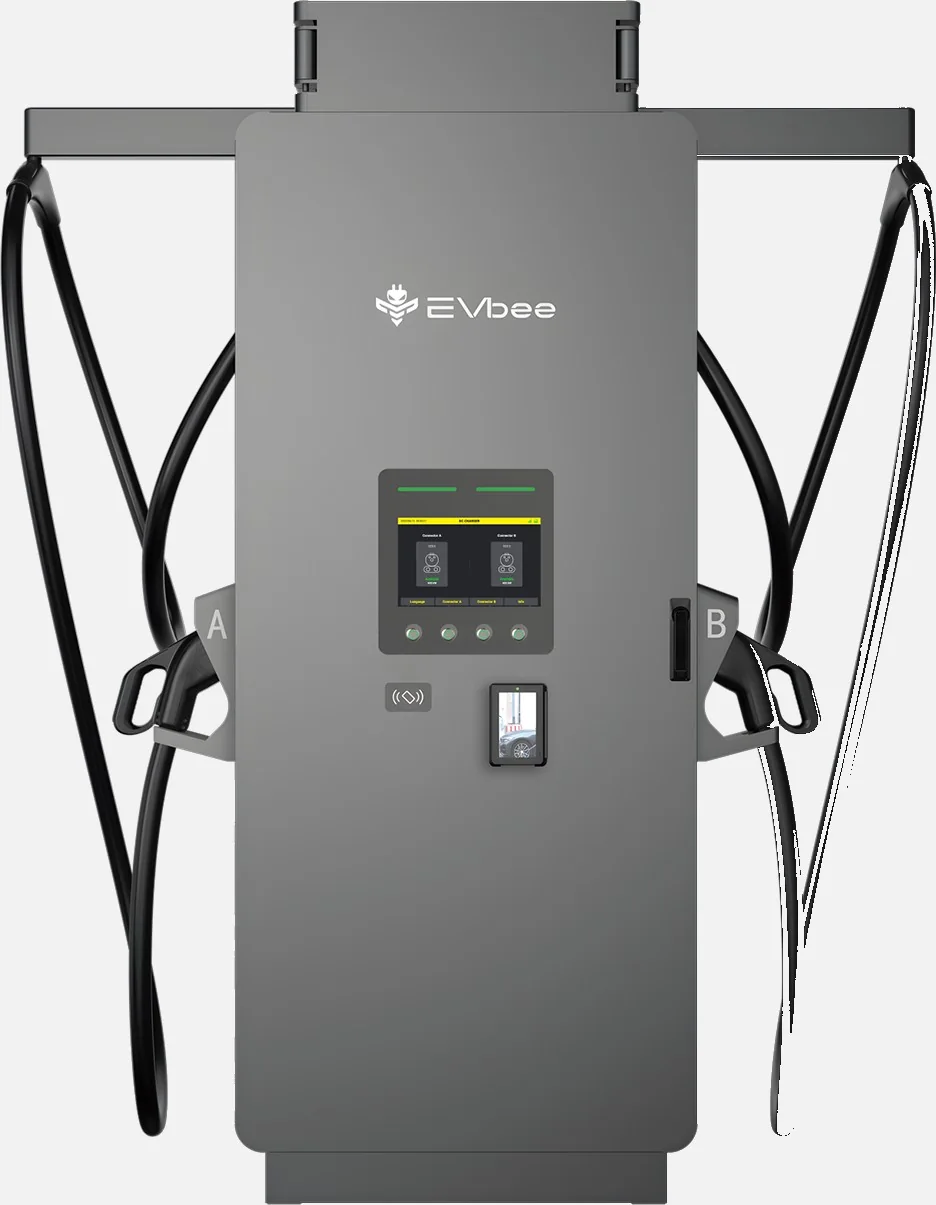
DC 400
200 to 400 kW
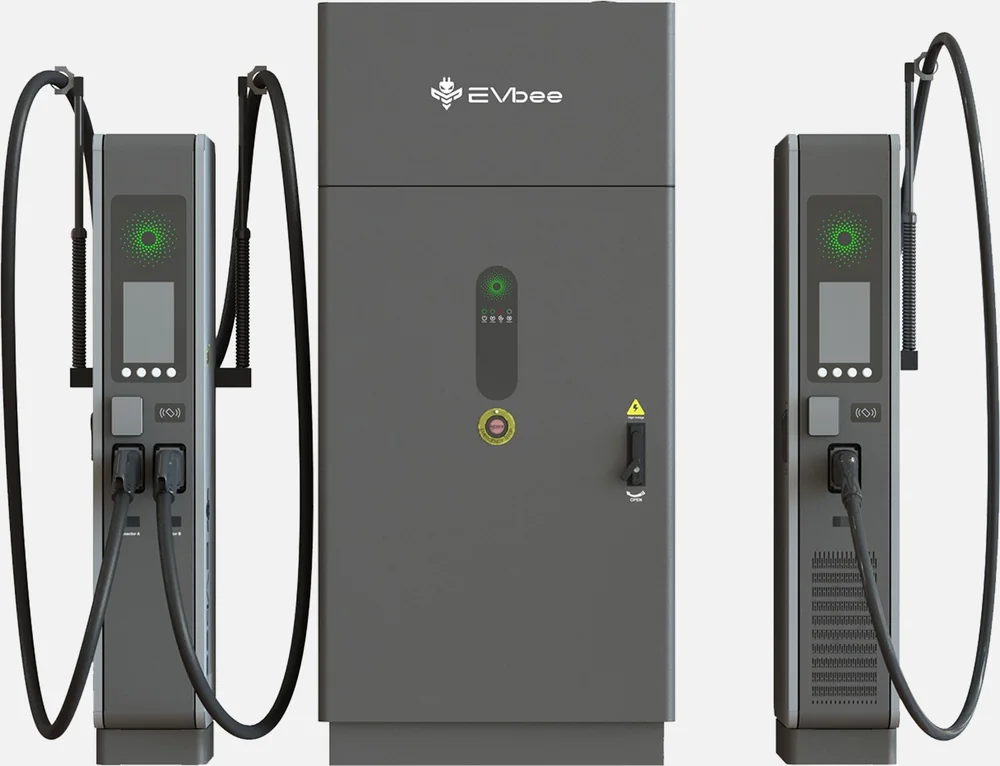
DC 800
800 kW to 1.6 MW
The EVbee range
From a wallbox to a megawatt hub
| Model | Power | Build | Typical use |
|---|---|---|---|
| DC 60 / 80 | 60 to 80 kW | Wall or pedestal, 2 × CCS2, upgradeable | Hotels, residences, retail, small depots |
| DC 180 | 120 to 180 kW | 2 × CCS2, 350 A, two cars at once, modular | Fleet depots, car parks |
| DC 400 | 200 to 400 kW | Up to 500 A, air-cooled, dynamic power allocation | Public hubs, trucks and vans |
| DC 800 satellite system | 240 kW to 800 kW per cabinet, 1.6 MW per double cabinet | Cabinet with 40 kW liquid-cooled modules, up to 10 dispensers; liquid-cooled dispenser for continuous 400 kW per plug; MCS-ready | Truck and bus depots, highway hubs |
EVbee data sheets, 2026. Modules are added in pairs; adding modules later needs one commissioning visit.
Trucks
Truck-specific charging logic
01
Tested with the trucks
EVbee has run interoperability tests with trucks and machines since 2022, with the major EU truck brands; it operates about 3,000 of its own DC chargers in China.
02
Power where the plug is
The satellite system shares one cabinet's modules between up to ten dispensers, so a truck at the gate gets 400 kW while the vans at the back share the rest.
03
Continuous or burst
An air-cooled 375 A cable delivers 400 kW for about 30 minutes; continuous 400 kW on one plug uses the liquid-cooled dispenser and cable. We size it to your stops.
Vans overnight
The cheapest power is the one you do not need
For vans with time at the depot, managed AC on a small connection beats DC on a big one.
13:00
Daytime: the depot is empty
The 50 vans are out from 07:00 to 15:00, about 65 km each. The solar roof supplies the building.
- 13:00: Daytime: the depot is empty. The 50 vans are out from 07:00 to 15:00, about 65 km each. The solar roof supplies the building.
- 15:30: All 50 vans plug in. Without load management they would all start at once: 50 × 16 A = 800 A, a new transformer and higher peak grid fees.
- 16:00: Solar and cheap hours first. The system charges while the sun still produces, never above 125 A, about 87 kW for the whole depot.
- 19:00: The evening peak is skipped. From 17:00 to 22:00 energy is at its most expensive. Charging waits, because the vans have until morning.
- 02:00: Night: the cheapest energy, never above 125 A. The 125 A are shared across all vans through the night. Peak power stays low, and so do the grid's power-based fees.
- 07:00: All 50 vans full by 07:00. The whole fleet is charged on a capacity sized for about eight chargers, without a new transformer.
How a depot project runs
From the transport file to the first charge
- 01
Fleet Check
Your own trips on a map: which are electric today, which need a charging break, which wait for longer-range trucks.
- 02
Site Study
Depot chargers year by year, grid connection and load profile, battery or not, equipment list, roadmap to 2030+, aid check.
- 03
Grid and permits
We file with Creos (or the local operator), size the transformer and cabinet, and plan civil works with BALTHASAR Group.
- 04
Install and commission
EVbee and VOOL hardware from stock where possible; commissioning, EMS set-up and driver cards.
- 05
Operate
One platform for AC and DC, one bill, remote diagnostics and updates, an SLA on request.
- €
Finance, if you prefer
From about €1 million, the whole depot as a monthly fee with our partner investment fund. See financing.
Ask your AI assistant
Depot questions
“How much DC power can one EVbee system deliver?”
“How long does it take to get DC chargers in Luxembourg?”
“Can a company get EV charging and battery storage without investing?”
“Can AC and DC chargers run on one platform?”
Send us the depot
Vehicles, shifts and the connection: we come back with the mix of AC, DC and storage, and the budget.